Damp & Condensation Treatment
Damp and condensation are the underlying causes of most mould problems in Yorkshire homes. We connect you with a vetted specialist who can correctly diagnose the type of damp and recommend the right treatment.
Condensation — the most common cause of mould
Condensation is by far the most common cause of mould in Yorkshire homes. It happens when warm, moisture-laden air meets a cold surface and turns back into water. Everyday activities — cooking, bathing, washing and drying clothes indoors — all release moisture into the air. Without enough ventilation, that moisture settles on cold walls, windows and ceilings, creating the damp conditions mould needs to grow.
Signs of condensation include water droplets on windows and walls (especially first thing in the morning), black mould in corners and behind furniture, and a musty smell. It's usually worse in winter and in rooms where moisture is generated.
Penetrating damp
Penetrating damp is water entering the building from outside — through defective pointing, cracked render, leaking gutters, damaged flashing or poorly fitted windows. It typically shows as damp patches that worsen after rain, often near the top of walls or around ceilings. The treatment is to find and fix the external defect, then repair any internal damage.
Rising damp
Rising damp is moisture travelling upward through the walls from the ground, usually because a damp-proof course is missing, bridged or has failed. It shows as a clear horizontal 'tide mark' on the wall, usually up to around a metre high, often with white salts on the surface. Treatment involves repairing or installing a damp-proof course and reinstating affected plaster.
Why correct diagnosis matters
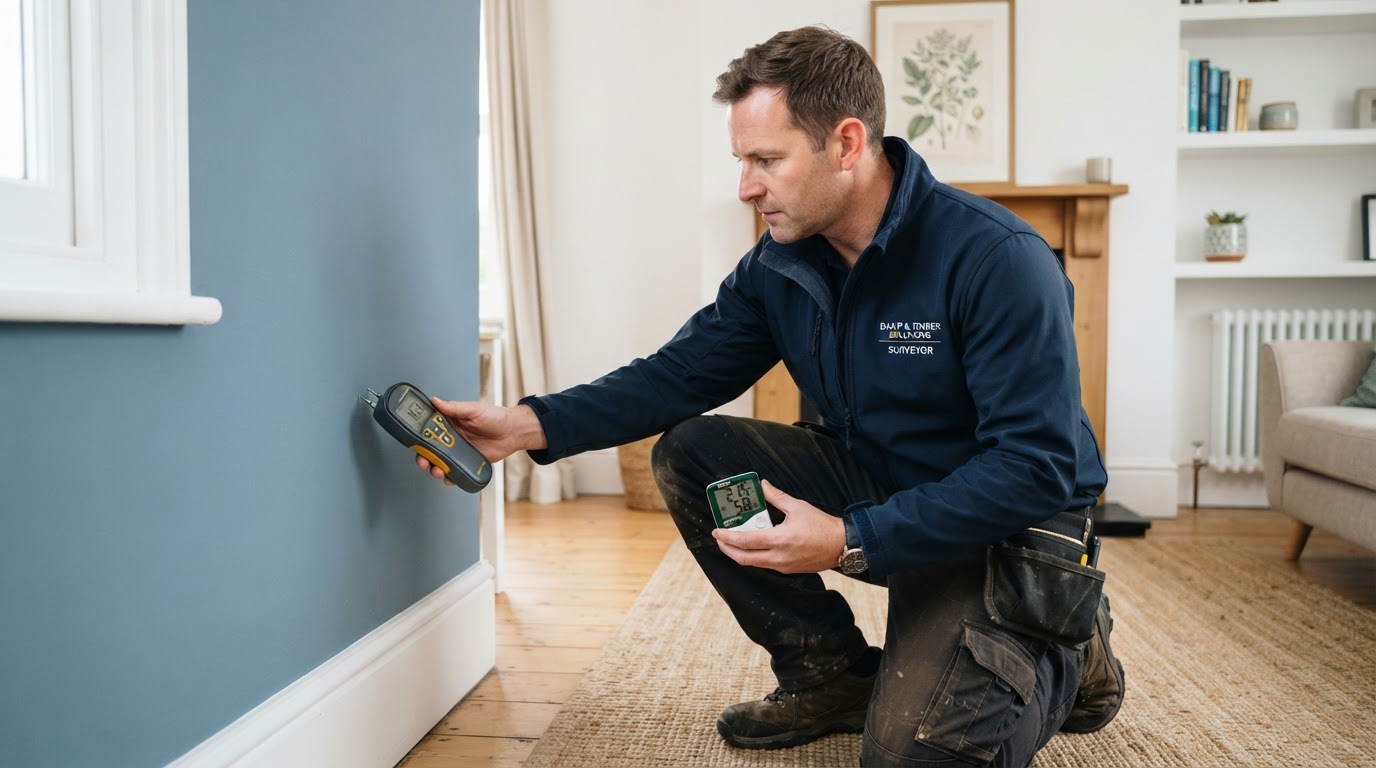
These three types of damp look similar but need completely different treatment. Treating condensation mould with rising-damp solutions, or vice versa, wastes money and doesn't solve the problem. A specialist uses moisture meters, hygrometers and visual inspection to confirm which type you're dealing with before recommending any work.
Common treatment approaches
- Improved ventilation — extractor fans, trickle vents and positive input ventilation.
- Heating & insulation — warming cold surfaces to reduce condensation.
- External repairs — fixing gutters, pointing, render and flashings for penetrating damp.
- Damp-proof course repair — for confirmed rising damp.
- Mould remediation — treating existing mould after the cause is resolved.
Yorkshire Mould Removal is an independent enquiry and referral service. With your permission, your information may be shared with a vetted local specialist so they can contact you regarding an assessment and quotation. We do not directly employ technicians.
How we diagnose damp
Visual Inspection
Identifying patterns, tide marks and external defects.
Moisture Testing
Meter readings to map moisture depth and location.
Humidity & Temperature
Hygrometer readings to assess condensation risk.
Ventilation Review
Checking extraction and airflow throughout the property.
Document Your Mould Case Professionally
Whether you're a tenant reporting mould or a landlord recording your response, a clear, dated record helps. Organise photographs, a timeline and an editable landlord letter into a professional Evidence Pack — free to start, £29.99 for the full formatted document.
Tenants
Keep a clear, dated record if you have reported mould or damp to a landlord or housing provider.
Landlords & agents
Document reports, visits and responses so you have a structured record of action taken.
Housing cases
Organise dates, photographs and communications in one place to support your account.
Build Your Mould Evidence Pack
Organise your photographs, build an incident timeline and generate an editable landlord notification letter.
One-time
£29.99
Professionally formatted PDF
A dated, structured document setting out your mould and damp evidence clearly.
Incident timeline
A chronological record of when the problem began and what has happened since.
Photograph appendix
Your photographs organised with dates and notes in one place.
Landlord notification letter
An editable letter you can tailor — no legal threats or claims a law was breached.
Evidence register
A clear register of previous reports, visits and responses.
Secure sharing link
A private link (expires after 30 days) to share with authorised people only.
This Evidence Pack organises information supplied by the customer. It is not a professional mould survey, laboratory test, medical diagnosis or legal advice. It does not prove the cause of mould or guarantee any legal outcome.
Request Your Free Mould Assessment
Tell us about the problem and we'll connect you with a vetted local specialist covering your area of Yorkshire.
Building a mould or damp case?
Organise photographs, a timeline and an editable landlord letter into a professional Evidence Pack — £29.99.
Yorkshire Mould Removal is an independent enquiry and referral service. With your permission, your information may be shared with a vetted local specialist so they can contact you regarding an assessment and quotation. We do not directly employ technicians.